








Mergers & Acquisitions: How Marketing Strategies Enable a Smooth Transition
5 Key Challenges in M&A that Marketing Strategies Can Solve Top M&A Lessons: Companies that clearly communicate the purpose of the merger,...
3 min read

For years, marketers have heard rumors that email is losing its relevance. Yet for many B2B organizations, email remains one of the most effective channels for nurturing prospects, supporting sales efforts, and maintaining relationships throughout the buyer journey.
What has changed is how buyers engage with email.
AI-powered inbox tools, evolving privacy requirements, and shifting buyer expectations are making it harder for organizations to earn attention. As a result, success depends less on sending more emails and more on delivering relevant, timely communication that aligns with buyers’ needs.

Here are five trends shaping B2B email marketing in 2026 and what organizations should consider as they plan for the future.
Email remains a valuable channel, but buyers are becoming increasingly selective about what they read and engage with.
AI-powered inbox tools, growing message volume, and changing work habits are making it easier for prospects to ignore anything that doesn't immediately appear relevant. In many cases, buyers are deciding whether an email is worth their attention before they ever open it. A recent report found that 55% of consumers make decisions based on AI-generated email summaries, with 15% choosing not to open an email and 5% deleting it based on the summary alone.
Organizations that consistently earn engagement focus on quality over quantity, delivering content that addresses real business challenges rather than filling inboxes with generic promotions.
Many organizations continue to send isolated announcements, promotions, and product updates.
Buyers, however, don't make decisions based on a single email. They move through a journey that often includes multiple touchpoints across email, websites, social media, events, conversations with sales, and independent research.
The organizations seeing the strongest results use email to support a broader buyer journey, ensuring prospects receive the right information at the right stage of the decision-making process. As part of a sales enablement strategy, email can help standardize messaging, support buyer engagement, and provide sales teams with content that answers common questions throughout the evaluation process.
This alignment between marketing and sales creates a more consistent experience for prospects while helping organizations reduce friction, accelerate decision-making, and nurture opportunities more effectively over time.
 |
Today's buyers expect every message to be relevant to their needs, challenges, and goals. In fact, 72% of B2B buyers state they will only engage with messages that address their exact pain points.
Instead of tweaking subject lines or inserting names, companies are creating emails that answer questions, solve problems, and support decision-making. Templates and messaging are being built around buyer needs, with solutions and insights taking priority over promotional content.
The organizations making this shift are seeing higher engagement and stronger results because relevance earns attention in a way personalization alone no longer can.
|
2026 Privacy Changes New regulations in France and Italy require clearer consent for email open tracking and greater transparency around how engagement data is collected. |
As buyer journeys become longer and more complex, timely communication is becoming increasingly difficult to manage manually.
Organizations are using automation to deliver relevant content based on buyer behaviors, engagement patterns, and interests. It's an approach that works: automated emails generate 320% more revenue than non-automated emails.
The goal isn't sending more email. It's creating more timely, consistent buyer experiences while allowing marketing and sales teams to operate more efficiently.
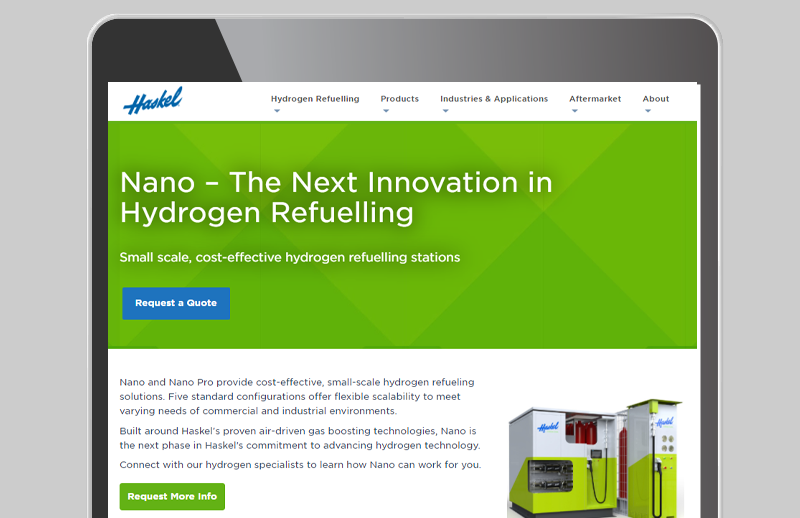
Learn how Launch Team turned email marketing into a lead generation engine for Haskel.
Read the full case study →
The strongest email programs don't stand alone. They support a broader marketing strategy that aligns messaging, content, lead generation, and sales goals.
At Launch Team, we help B2B organizations connect email marketing with content, social media, and sales initiatives to create more meaningful buyer engagement and measurable business results.
Ready to strengthen your email marketing strategy?


5 Key Challenges in M&A that Marketing Strategies Can Solve Top M&A Lessons: Companies that clearly communicate the purpose of the merger,...

Technology Doesn't Replace Great People. It Helps Them Scale Their Impact. Manufacturers have always competed on quality, delivery, engineering...
TL;DR AI is changing how buyers consume email. Subject lines, preview text, and relevance matter more than ever. Email performs best as part...