







 Planning a B2B product launch for 2027 but not sure where to start?

2026 Q3 Industry Lookback & What to Prioritize in Q4
Updated October 2026 In Q2, companies were back in motion. In Q3, companies were focused on upgrading existing marketing and sales processes to meet...
5 min read

In Q2, companies were back in motion. In Q3, companies were focused on upgrading existing marketing and sales processes to meet the changed buyer cycle.
After several years of cautious decision-making due to geopolitical changes, the pandemic, and shifting industries, many organizations are investing in themselves—exploring growth initiatives and new markets, modernizing their digital presence, and revisiting long-delayed strategic projects.
Across our client portfolio, Q3 brought high-quality lead generation and a noticeable increase in organizations preparing for M&A deals, shifts in buyer behavior and supply chains, and accelerated growth in many deep tech industries.
| Supply Chain Shifts | Funding | Market Shifts | Workforce |
|
|
|
|
Your competitive landscape is changing. 2025 stalled, but 2026 saw pent-up demand, with big M&A deals dominating the market. Deals have doubled over the last year. Many of those are buying for innovation to outsource their R&D, filling a gap in their current product portfolio, or to enter emerging markets.
Despite the surge, 70%-90% of mergers and acquisitions fail due to incomplete integration, poor rebranding, and lack of change management. Learn how to ensure a successful transition.
Many of our industries are experiencing supply chain disruptions and delays due to geopolitical changes and material shortages. Manufacturers are investing in domestic suppliers more heavily, but access to some specialized or “rare earth” materials continues to be influenced by global trade dynamics and regional supply constraints.
This has created more challenges in sourcing, component authentication, and longer lead times (many OEMs are commonly seeing 3–6-month lead times). This is a good time for suppliers to market stock portfolios, if possible.
Many next-generation semiconductor tools are transitioning from development into production environments, driven mainly by AI infrastructure, hyperscale data centers, and advanced packaging changes. However, the semiconductor industry is especially experiencing supply chain shifts due to geopolitical unrest, tariffs, and sourcing challenges.
As OEMs scale manufacturing and demand increases across the supply chain, companies serving semiconductor fabs are winning design-in opportunities backed by AI chips, silicon photonics, packaging, and metrology.
After a period of research and prototyping, the quantum market is seeing real commercial demand in quantum sensing and enabling photonics technologies. Organizations developing quantum sensors are investing in highly stable lasers, specialized optical components, integrated photonics, cryogenic systems, advanced detectors, and precision positioning technologies that improve measurement accuracy and system reliability.
The quantum technology market alone is expected to reach between $60 billion and $100 billion worldwide by 2035, with Europe and North America leading the charge. The main driver is that the market is maturing through innovations that are ready to be manufactured, sold, and scaled.
|
Looking across all of our clients’ metrics and activities in Q3, here’s what we noticed:
Buyers are using AI as a search engine over traditional browsers.
Across industries, we saw a significant reduction in traditional organic search traffic as buyers increasingly rely on AI-powered research tools to identify vendors. In some cases, prospects are conducting their research entirely through AI-generated summaries and contacting companies directly without ever registering as website visitors.
However, this is not a one-time fix. Almost 50% of AI-cited content is less than 13 weeks old. Furthermore, web content under 30 days old gains about 3.2x more citations than older pages. High-value content, like pillar articles, industry webpages, and use cases, must be updated every 3 to 6 months (and it has to be more than just a couple of words that change).
The strongest sales and marketing still have a human touch.
There is a lot of “AI slop,” and most audiences now ignore it or call it out when they see it. Brands that stay true to their personality are the ones that win. Imperfect over polished and bland content help boost credibility.
Authentic photos, employee stories, case studies, customer interactions, and candid content should all be in your Q4 plan for both sales and marketing. Organizations that encourage employees to share insights, contribute expertise, and help distribute content create marketing advantages that are difficult for competitors to replicate. Many companies are even limiting employee AI access and tracking AI usage in images and content.
Learn how to win B2B technical sales in 2026 from Salescycle’s founder, Joe Delfino: 2026 State of B2B Technical Sales.
Major KPI Change: Prioritize conversion over CTR on social media.
Benchmarks and KPIs are changing with user behaviors. Everyone can get clicks on social media; now the focus needs to be on conversion. Who is interacting with your content vs. who is entering your pipeline? Marketing and sales should be tailored to generate leads, not just engagement.
What should be your new KPI? Pay attention to landing page interactions and form submissions to capture more leads. Consider updating forms for relevance to their buyer's journey or campaign and route them to the right person more directly.
Here’s what you should consider for your marketing strategy:
Content freshness for AI visibility.
New content signals relevance to LLMs. The companies seeing the strongest results are focusing on more frequent website updates, industry-specific pages aligned to target markets, strategic paid social campaigns, and AI-friendly content structures. But be sure to balance authenticity with AI-structured content. At the end of the day, people will buy from people.
Key tip: Try updating your old blogs and website pages with GEO (generative engine optimization) in mind.
Improved sales efficiencies.
In our industries, buyers are harder to reach, and sales teams are expected to generate more revenue with the same resources. In fact, our research shows that 43% of sales and marketing people lack accurate data on accounts. Moreover, companies with effective sales/marketing collaboration outperform others by 3x.
Organizations should audit their sales processes and leverage AI and CRM automation to scale revenue and reduce manual administrative work without increasing headcount.
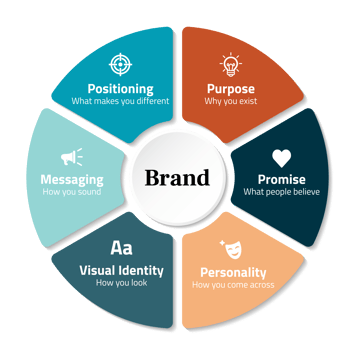 Building trust through personal branding.
Your engineers, scientists, technical specialists, sales leaders, and subject matter experts are often among your most powerful marketing assets. In many cases, building visibility and content around your team also helps build trust in your company.
Preparing for an M&A exit? Maximize valuation with sales and marketing.
Your valuation is often based on your company’s 3-year performance. Common challenges in growing your value are founder-led sales, product/service lines that grew by happenstance, and reliance on one or two customers. To combat this, focus on things you can control: differentiate your positioning, make a marketing plan, get your CRM in order, and create a strong sales process, all to create a stronger pipeline.
The last quarter of the year will reward companies that adapt faster, whether that means improving visibility in AI-driven search, tailoring services to meet supply chain shifts, modernizing their website, or creating a stronger connection between marketing and revenue.Need to discuss what marketing and sales strategies could benefit your organization? Talk to Launch Team.
|
Updated October 2026 In Q2, companies were back in motion. In Q3, companies were focused on upgrading existing marketing and sales processes to meet...

5 Key Challenges in M&A that Marketing Strategies Can Solve Top M&A Lessons: Companies that clearly communicate the purpose of the merger,...

Technology Doesn't Replace Great People. It Helps Them Scale Their Impact. Manufacturers have always competed on quality, delivery, engineering...